
Episode 2: Introduction
The American public grapples with the question of if criminals are born or made.
From
Episode 2: Introduction
Clip: Episode 2 | 5m 37sVideo has Closed Captions
The American public grapples with the question of if criminals are born or made.
In the early 1800s, penitentiaries and uniformed police forces have emerged across the United States to combat crime. But, by the late 19th century it has become clear that they have not eliminated crime entirely, as a wave of mob justice and vigilantism sweep the nation. As millions of immigrants arrive in the United States, the nation must grapple with how to prevent crime and pursue justice.
From
Problems playing video? | Closed Captioning Feedback
Problems playing video? | Closed Captioning Feedback
Episodes presented in 4K UHD on supported devices. Major funding for CRIME AND PUNISHMENT IN AMERICA was provided by The Atlantic Philanthropies, Emerson Collective, The Andrew W. Mellon Foundation, and...
Episode 2: Introduction
Clip: Episode 2 | 5m 37sVideo has Closed Captions
In the early 1800s, penitentiaries and uniformed police forces have emerged across the United States to combat crime. But, by the late 19th century it has become clear that they have not eliminated crime entirely, as a wave of mob justice and vigilantism sweep the nation. As millions of immigrants arrive in the United States, the nation must grapple with how to prevent crime and pursue justice.
From
Problems playing video? | Closed Captioning Feedback
Where to Watch Crime and Punishment in America
Crime and Punishment in America is available to stream on pbs.org and the PBS app.
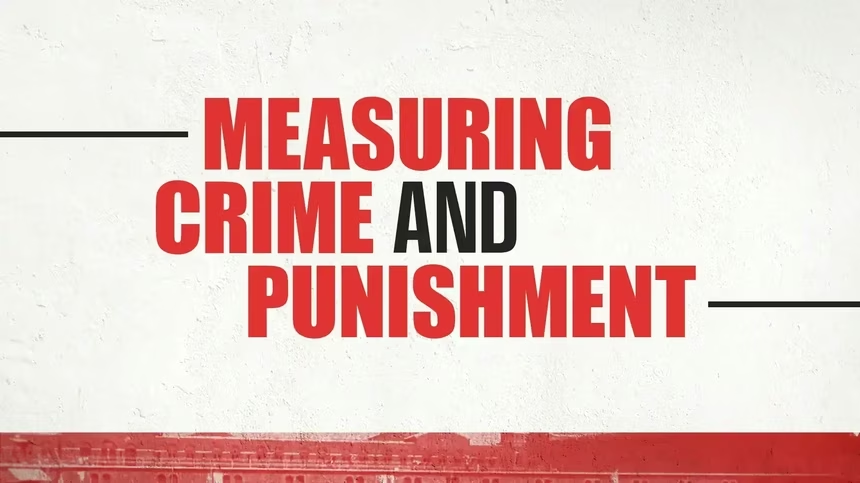
Measuring Crime and Punishment
How does the way we collect and measure crime shape our understanding of it? Crime statistics can tell us how crime changes over time. But the way crime is measured, defined, and communicated can also shape public perception and policy.Providing Support for PBS.org
Learn Moreabout PBS online sponsorshipNarrator: In 1896, a photographer named Clara Sheldon Smith opened a studio in the gold rush town of Marysville, California.
[Camera shutter clicking] She photographed local events, people at work, and made formal portraits.
In 1900, Smith was hired by the town to photograph everyone arrested there.
♪ Over the next eight years, hundreds of people from all walks of life and accused of all sorts of crimes were taken from the jail to her studio to have their pictures taken.
The portraits she made of them were not like any mugshots taken in America.
♪ Reginald Dwayne Betts: One of the things that people actually are afraid to ask folks is why people commit crimes.
And I think one of the reasons why they're afraid is because people commit crimes for a whole lot of reasons.
If you push me to say why do people commit crimes, I will say that they're living in environments with intense emotional challenges that aren't being addressed.
And you make mistakes.
And you have these moments where you fall asleep in the dream of your enemy.
I don't think anybody grows up in the world and says, "What is the most effective way for me to hurt somebody else?"
♪ Franklin Delano Roosevelt: A prison to us is no longer a bastille to keep people in indiscriminately, and our object ought to be to turn them out as better citizens than when they went into prison.
J. Edgar Hoover: The Federal Bureau of Investigation is waging a relentless warfare against crime and criminals.
Newsreel reader: The king of the gangsters is about to be taken for a ride by your Uncle Samuel.
William Parker: You see, crime in America is skyrocketing.
It is not a question of the proficiency of the police.
It's a question of the indulgences of the American people.
Policeman: Get your hands up, I said.
Drop that purse and get your hands up.
LD Barkley: We are men.
We are not beasts, and we do not intend to be driven or beaten as such.
Doris Tate: We must fight for victims' rights, and we know the victims have no rights.
Speaker: The crime rate isn't going down.
Violent crime was up 10% across the country last year.
Ronald Reagan: We must make America safe again.
It's time to get these hardened criminals off the street and into jail.
Speaker: How do you ask somebody to forgive you for something that is almost impossible to forgive?
Bill Clinton: When you commit a third violent crime, three strikes and you are out.
Bill Bratton: I'm sensing a fear among American police forces that we are losing the streets.
Betts: Everybody says, "Why'd you do it?"
But we never have reasons, never good ones.
♪ Narrator: Americans had built the world's first penitentiaries in the early 1800s with the hope that incarceration would inspire repentance and reform, and nearly every city had established uniformed police forces with the goal of preventing crime and disorder.
But in the late 19th century, it was clear that neither of these efforts had solved the problem of crime.
In the coming years, across large swaths of the nation, the rule of law would be swept away by an unprecedented wave of vigilantism and mob justice.
Meanwhile, as millions of poor immigrants filled the cities, a sense of fear and menace began to take hold, and Americans could not agree about whether criminals were born or made.
The most famous trial lawyer in America, Clarence Darrow, insisted that until the United States addressed the problem of poverty, the nation would never solve the problem of crime.
Voice: There is no very great danger of a rich man going to jail.
Nobody will commit burglary when he has a house full.
The only way to cure these conditions is by equality.
There should be no jails.
They do not accomplish what they pretend to accomplish.
If you would wipe them out, there would be no more criminals than now.
They are a blot upon any civilization, and a jail is an evidence of the lack of charity of the people on the outside who make the jails and fill them with the victims of their greed.
The laws are really organized for the protection of the men who rule the world.
They were never organized or enforced to do justice.
We have no system for doing justice, not the slightest in the world.
Clarence Darrow.
 New
Clara Sheldon Smith's stunning mug shots
Video has Closed Captions
Clip: Ep2 | 1m 53s | Photographer Clara Sheldon Smith captures hundreds of mugshots in the early 20th century. (1m 53s)
 New
The Execution of Roxalana Druse
Video has Closed Captions
Clip: Ep2 | 2m 34s | In 1887, the botched hanging of Roxalana Druse causes Americans to rethink the death penalty. (2m 34s)
 New
The Federal Government vs. Indigneous Justice
Video has Closed Captions
Clip: Ep2 | 4m 45s | After a Lakota leader is murdered, the federal government overrules the tribe's resolution. (4m 45s)
 New
The Green Goods Game: The Most Devious Scam in America
Video has Closed Captions
Clip: Ep2 | 7m 42s | Unable to find legal work, George Appo turns to a devious scam, the green goods game, to make money. (7m 42s)
 New
How Racism and Eugenics Impacted the Criminal Justice System
Video has Closed Captions
Clip: Ep2 | 3m 22s | As millions of immigrants flood to the United States, the popularity of the eugenics movement grows. (3m 22s)
 New
Inspector Thomas Byrnes and the Evolution of Policing
Video has Closed Captions
Clip: Ep2 | 11m 38s | Inspector Thomas Byrnes reinvents policing tactics in the 19th century using brutal methods. (11m 38s)
 New
Lawyer Clarence Darrow Steps Up to Defend the Sweet Family
Video has Closed Captions
Clip: Ep2 | 11m 10s | The legendary lawyer Clarence Darrow defends the Sweet family in their murder trial case. (11m 10s)
 New
The Lexow Commission Exposes Police Brutality and Corruption
Video has Closed Captions
Clip: Ep2 | 8m 40s | In 1894, the Lexow Commission forms to investigate corruption and police brutality among the NYPD. (8m 40s)
 New
The Police Clash with Bootleggers Over Prohibition
Video has Closed Captions
Clip: Ep2 | 5m 27s | Prohibition creates a black market for alcohol, leaving police struggling with enforcement. (5m 27s)
 New
The Story of the Sweet Family and Housing Segregation
Video has Closed Captions
Clip: Ep2 | 8m 53s | A white mob gathers to force the Sweet family into fleeing their new house in Detroit. (8m 53s)
 New
Suffragists Tell the Stories of Incarcerated Women
Video has Closed Captions
Clip: Ep2 | 6m 26s | Suffragist Kate Richards O'Hare details the experiences of the women she meets while incarcerated. (6m 26s)
 New
Thomas Mott Osborne Brings Reform to Sing Sing Prison
Video has Closed Captions
Clip: Ep2 | 10m 39s | After experiencing being imprisoned, Thomas Mott Osborne dedicates himself to reforming Sing Sing. (10m 39s)
Providing Support for PBS.org
Learn Moreabout PBS online sponsorship








Support for PBS provided by:
Episodes presented in 4K UHD on supported devices. Major funding for CRIME AND PUNISHMENT IN AMERICA was provided by The Atlantic Philanthropies, Emerson Collective, The Andrew W. Mellon Foundation, and...