
Preview
Preview: Season 2026 | 30sVideo has Closed Captions
"Our New World" reveals Nature's astonishing adaptation abilities and how humans can help it thrive.
What world will we live in tomorrow as climate change reshapes the Earth? Our planet has many surprises in store. This film reveals Nature's astonishing adaptation abilities, and how we humans can become a supporting force.
Problems playing video? | Closed Captioning Feedback
Problems playing video? | Closed Captioning Feedback
Preview
Preview: Season 2026 | 30sVideo has Closed Captions
What world will we live in tomorrow as climate change reshapes the Earth? Our planet has many surprises in store. This film reveals Nature's astonishing adaptation abilities, and how we humans can become a supporting force.
Problems playing video? | Closed Captioning Feedback
How to Watch Our New World
Our New World is available to stream on pbs.org and the free PBS App, available on iPhone, Apple TV, Android TV, Android smartphones, Amazon Fire TV, Amazon Fire Tablet, Roku, Samsung Smart TV, and Vizio.
(gentle music) - [Narrator] Our planet is changing fast.
Some regions are becoming inhospitable, others are transformed.
- Our biggest concern was would nature pull back all that she's lost?
- [Narrator] Every animal on Earth is trying to adapt to this new world.
(gentle upbeat music) This is a journey around our planet to discover our new world.
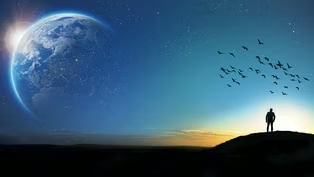 Now Playing
Video has Closed Captions
"Our New World" reveals Nature's astonishing adaptation abilities and how humans can help it thrive. (30s)
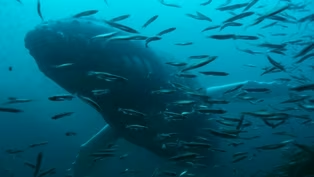
Video has Closed Captions
CGI timelapse reveals the birth of an ecosystem in a formerly frozen region of Alaska. (1m 48s)
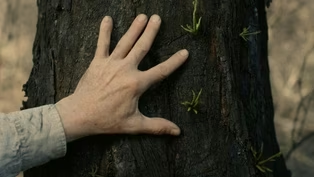
Video has Closed Captions
After the 2019 - 2020 wildfires, CGI timelapse reveals a forest’s rebirth in Australia. (2m 11s)
Providing Support for PBS.org
Learn Moreabout PBS online sponsorship
- Science and Nature

Explore scientific discoveries on television's most acclaimed science documentary series.

- Science and Nature

Capturing the splendor of the natural world, from the African plains to the Antarctic ice.










Support for PBS provided by: